Freight keeps our cities moving, but it comes at a cost: emissions, noise, and congestion.
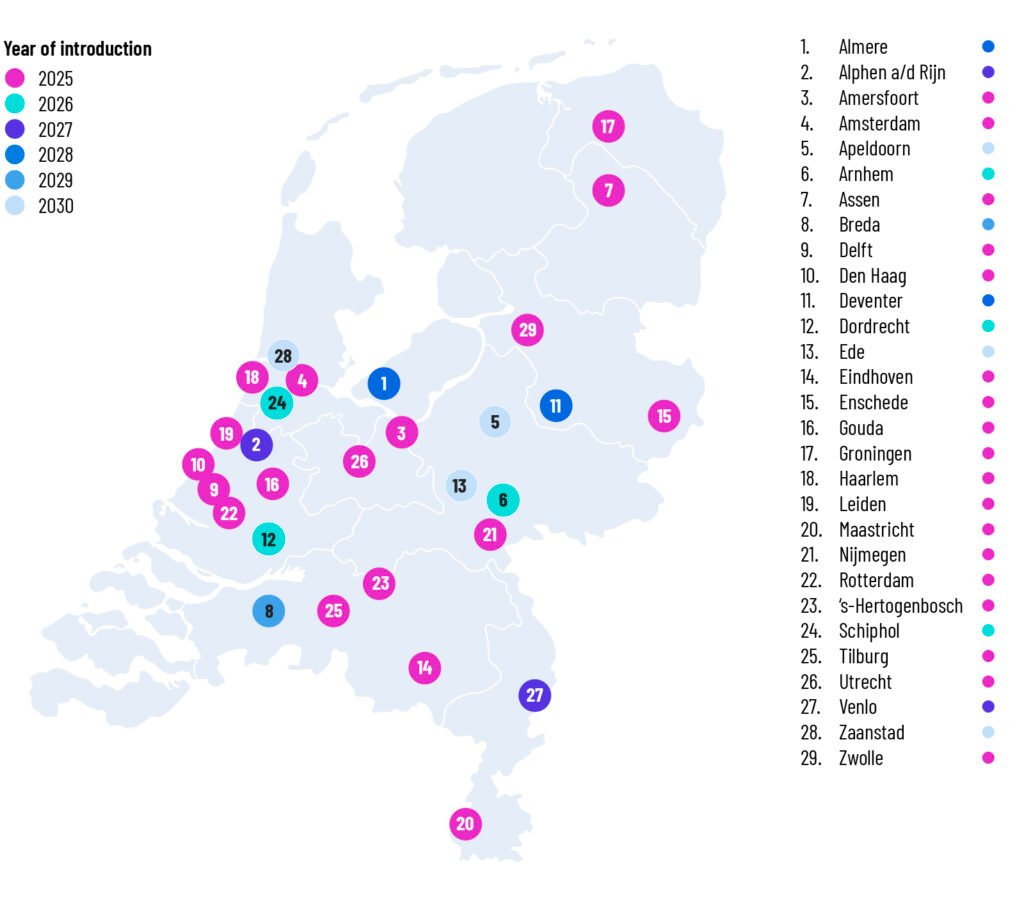
In 2025, the Netherlands took a bold step to address this by introducing 18 zero-emission zones for freight (ZEZ-Fs), with plans to expand to 29 municipalities by 2030.
Early data shows these zones are already driving a rapid shift to electric vans and trucks, offering a blueprint for cleaner, quieter, and healthier urban freight across Europe.
In the first half of 2025, 78.4% of newly registered vans in the Netherlands were battery-electric - far above the EU average of 8.5%.
Electric truck registrations rose by 187.6% year-on-year, representing a quarter of all new electric trucks sold in the EU, compared with EU-wide growth of 46.1%.
Even cities neighboring ZEZ-Fs see faster uptake of electric vans, reaching an average of 2.9%. This “spill-over” effect suggests that clear policy can influence broader regional adoption.
Cities that have committed to zero-emission zones for freight (ZEZ-F) by 2030 already show faster adoption of electric vans.
By January 2025, these municipalities averaged 6.1% electric vans, compared to 1.7% in municipalities without ZEZ-F plans. Early trucks data shows a similar trend.
Company strategies confirm the zones’ impact. Operators cite ZEZ-Fs as a key driver for switching to emissions-free fleets, supported by timelines and proactive engagement that allow businesses to plan their investments.
Cities in the Netherlands have the authority to introduce zero-emission zones for freight (ZEZ-Fs) through a traffic decree, which must be adopted at least four years before the zone takes effect.
On the map below you can see all of the existing and planned zero-emission zones for freight in the Netherlands.
Get the complete Clean Cities analysis of ZEZ-F impact in the Netherlands 👇
This research was funded by the European Union. Views and opinions expressed are, however, those of the author(s) only and do not necessarily reflect those of the European Union or CINEA. Neither the European Union nor CINEA can be held responsible for them.