
New research shows the huge pressure on London roads in the evening rush hour, significantly worse than in the morning.
New research published by Clean Cities shows the huge pressure on London roads in the evening rush hour, significantly worse than in the morning.
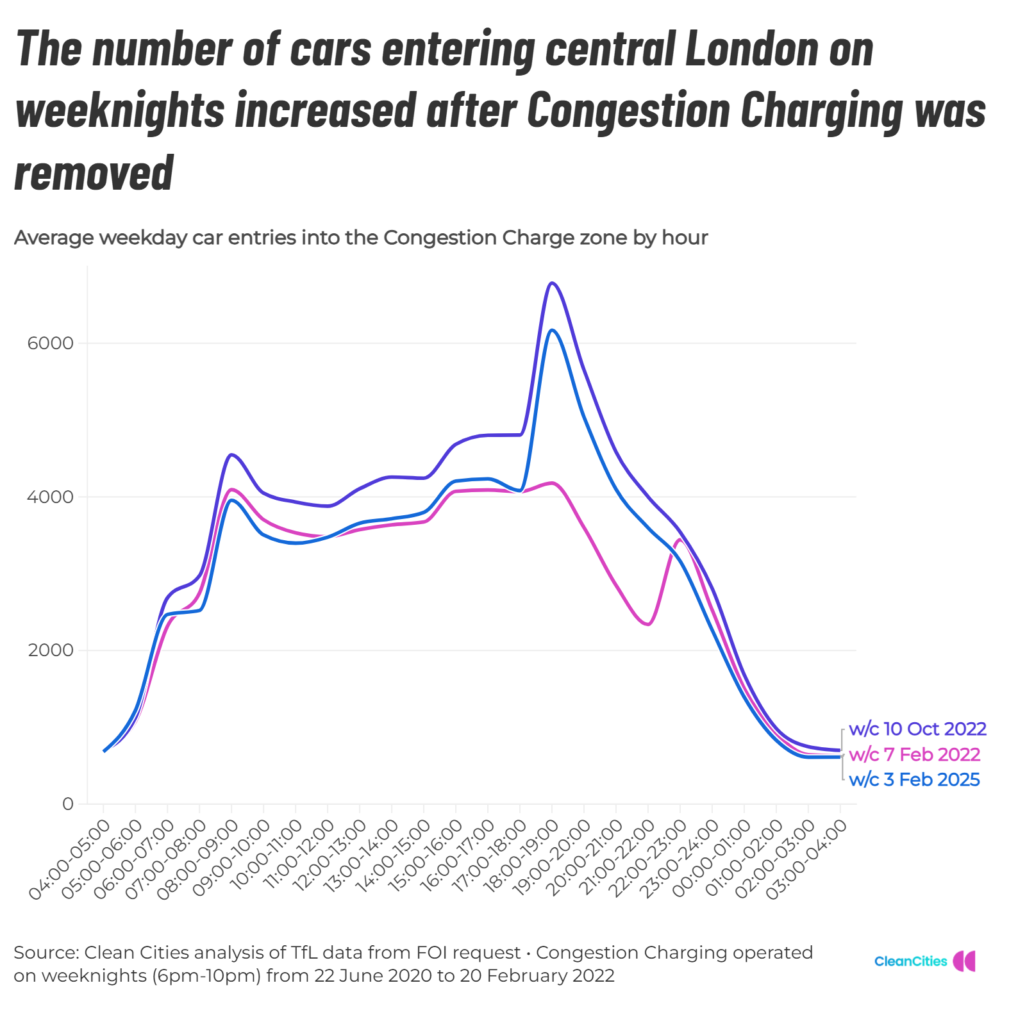
The number of cars coming into central London dramatically increases after 6pm when the Congestion Charge and car parking controls end. There are 56% more cars going into the congestion charging zone (6,170 entries) in the evening peak of 6-7pm, compared to the morning peak of 8-9am (3,955 entries). [1]
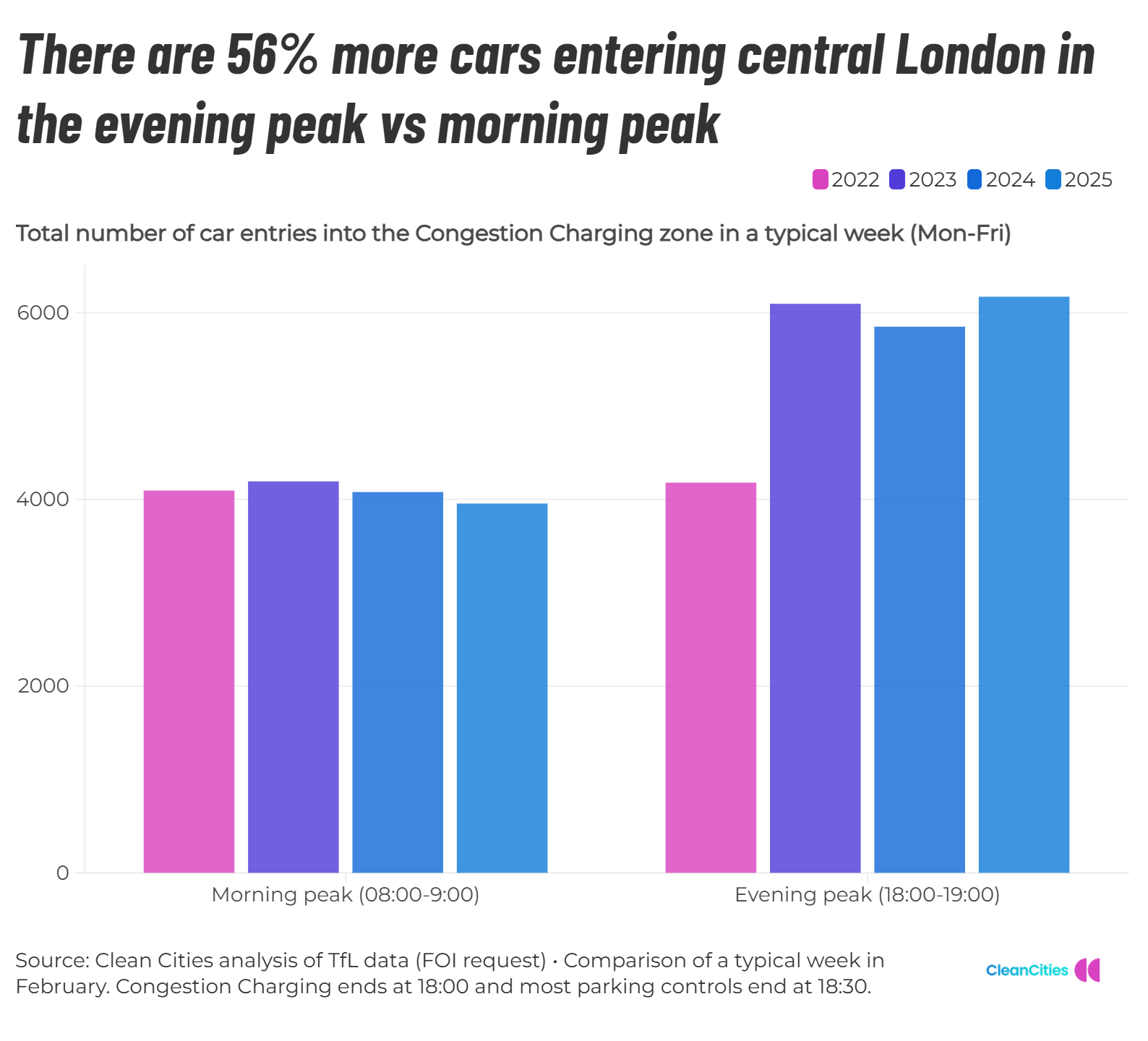
Campaigners are calling for an action plan to fix traffic in the West End to make it safer, easier and more enjoyable for people to walk around, whilst reducing congestion for those making the most urgent and time critical journeys. The analysis is based on the number of car entries into the Congestion Charge zone in London during a typical week, derived from publicly available TfL data and FOI requests. [1]
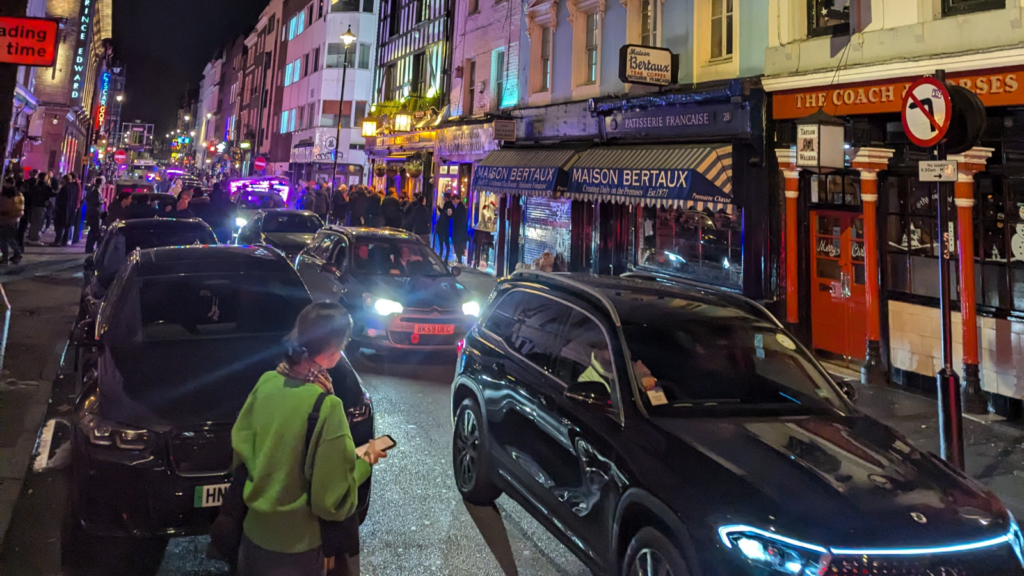
Clean Cities’ analysis highlights the importance of traffic calming measures. When the Congestion Charge operated until 10pm on weeknights there was a marked drop in evening car entries but after this was removed, traffic volumes rose sharply again. [2]
The findings suggest that the lack of traffic management is actively encouraging additional car trips into central London. It comes amid growing public concern about congestion ahead of local elections in London. New polling to be published later this month by Clean Cities shows that 95% of Londoners say that congestion is a problem, with 63% saying it is an important problem. Only 3% believe it is not a problem at all. [3].
Oliver Lord, UK Head of Clean Cities, said:
“You’d think London’s roads calm down after work – but after 6pm the West End turns into the Wild West, with no congestion charge and few parking controls.
Traffic gridlock isn’t inevitable, it’s the result of policy choices – when weeknight Congestion Charging was in place, traffic fell.
While cities across Europe make it easy and inviting to walk, spend and enjoy the evening, London’s night-time economy is being choked by cars.”
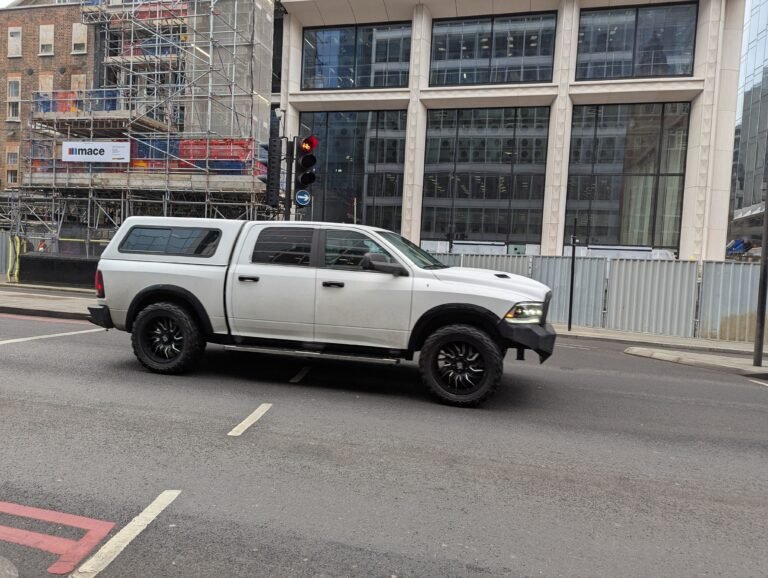
Clean Cities warns that the issue is being made worse by carspreading – the rapid growth in the size of private vehicles including supersized SUVs – which means each car now takes up more road space, slows traffic further and increases road danger.
In London, the number of SUVs has increased by almost three quarters of a million (720,000), from around 80,000 SUVs in 2002 to around 800,000 SUVs in 2023. If you tried to park these 800,000 SUVs next to each other, with a 1m gap between them, it would take up the same size as the entire London Borough of Kensington and Chelsea. [4]
Clean Cities is calling on the Mayor of London and local authorities to work together on an action plan for the West End, which stretches beyond Oxford Street, to create more public space for people. Measures in the action plan should include:
The organisation says these measures would help unlock traffic in the West End, reduce pollution and make central London safer, more economically vibrant and accessible for residents, workers and visitors alike.
Clean Cities are one of the founder members of The SUV Alliance, a campaign made up of a coalition of 19 environmental and transport groups. The Alliance has published a manifesto calling for changes to Vehicle Excise Duty to tax SUVs and the heaviest and most polluting vehicles more when they are sold and to allow local authorities to introduce higher parking charges on SUVs and other heavier, more polluting vehicles. [5]
Notes to editors
How much of a problem the following is in your city in your opinion ?
Traffic Congestion | Total | Female | Male |
TOTAL RAW | 1 048 | 547 | 501 |
|
|
| |
One of the most important problems | 26% | 27% | 25% |
An important problem | 37% | 34% | 40% |
A moderate problem | 23% | 25% | 21% |
A minor problem | 9% | 9% | 9% |
Not a problem at all | 3% | 3% | 3% |
Don’t know/No answer | 2% | 2% | 2% |
______ | ______ | ______ | |
100% | 100% | 100% | |
|
|
| |
ST TOP 2 (an important problem) | 63% | 61% | 65% |
ST TOP 3 | 86% | 86% | 86% |
ST TOP 4 (a problem) | 95% | 95% | 95% |