London ranked 30th out of 42 cities in race to help people ditch polluting cars
July 3, 2023
London performs poorly in new Europe-wide ranking of 42 cities’ efforts at introducing greener shared and electric powered transport
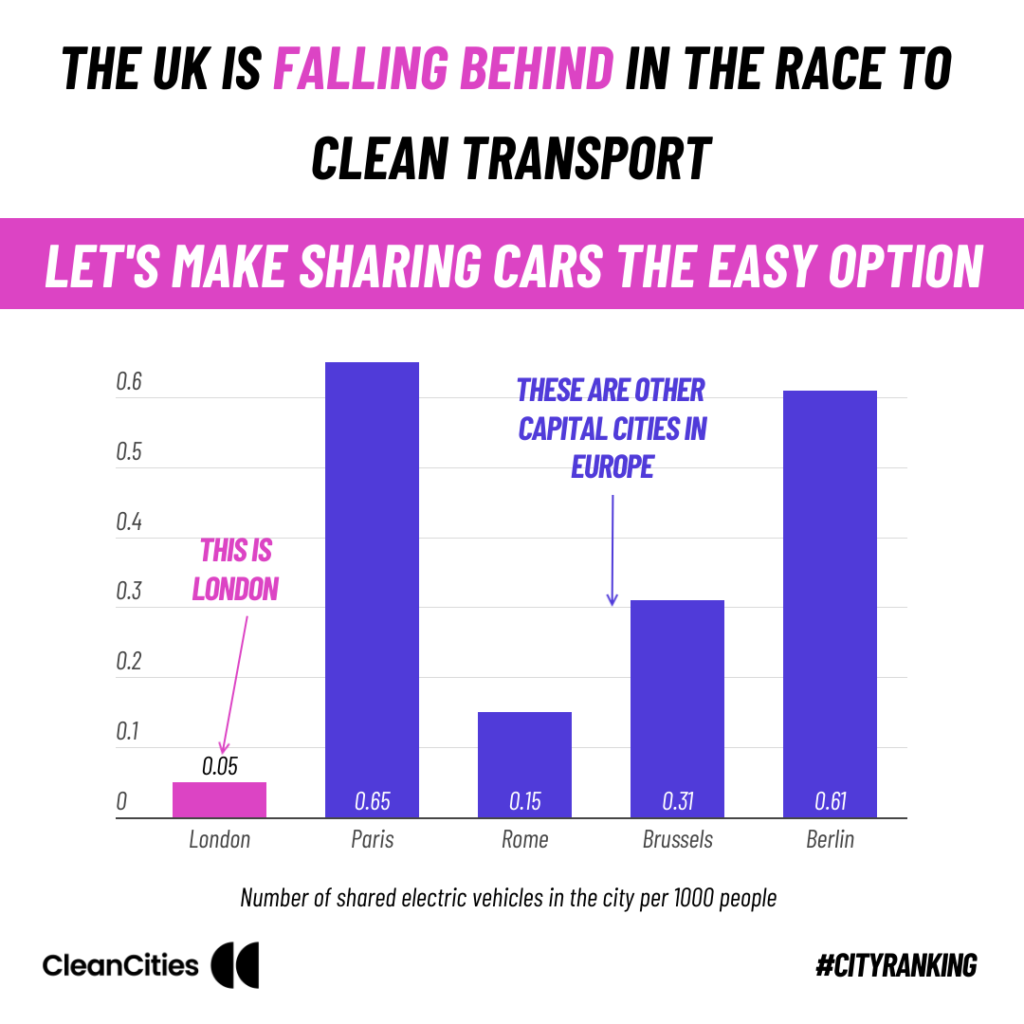
UK capital ranked 30th out of 42 cities in deploying electric car clubs – ranking behind major cities including Paris, Rome, Brussels and Berlin
Campaigners frustrated that Londoners are missing out on quick, scalable and cost effective solutions to tackle the climate emergency.
London has performed poorly in a new ranking Thank you for Sharing by the Clean Cities Campaign of 42 European cities [1], which explores the critical rollout of shared and zero-emissions transport in the battle for cleaner air and the race to net zero. This is especially the case for electric car clubs, where London is ranked 30th, behind major European cities including Paris, Rome, Brussels and Berlin [2].
The latest data shows 29 private cars were replaced by each car club vehicle in London, demonstrating the potential for scaling up car clubs in support of wider clean air measures. Unfortunately today’s ranking shows how the capital is currently lagging in the supply of cleaner electric car clubs – with only 0.05 shared EVs per 1000 population (coming in at 30th place in the ranking). Table leaders Copenhagen have 1.76 shared EVs per 1000 population.
“The best way to help Londoners break free from polluting cars is to ensure the alternatives are as attractive and convenient as possible. London has a great reputation at delivering big ticket items like rail and electric buses but the city has often sidelined emerging solutions that are quick, scalable and cost effective.
We need every solution on the table in our battle for cleaner air. The lack of support for electric car clubs is especially frustrating given that they can be deployed quickly and at scale, whilst being proven to help people ditch their polluting cars and to drive less often. ”
Oliver Lord, Head UK for the Clean Cities Campaign
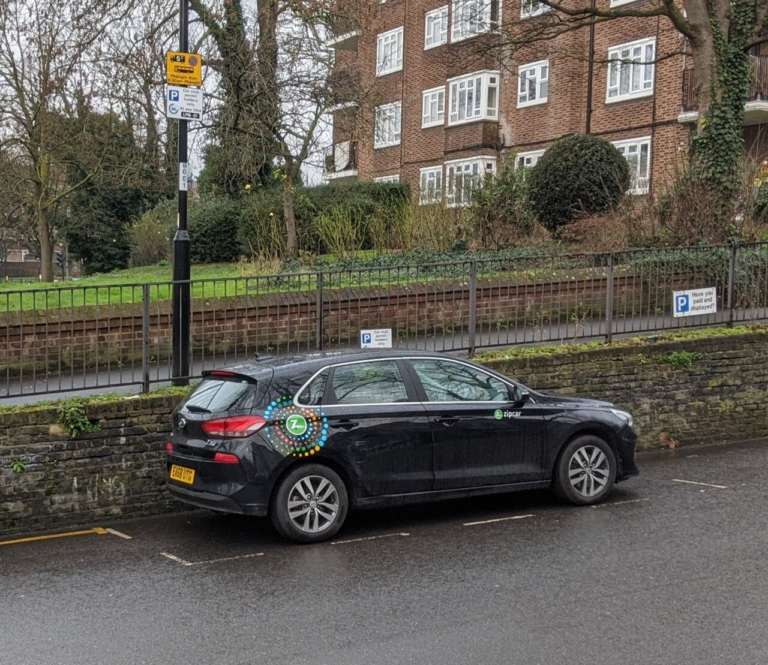
The UK has several car club operators, with more than 320,000 people signed up to share a car in their local neighbourhood [4]. This is often cheaper and convenient given that the average car in England is driven 4% of the time [3]. Furthermore, three quarters (74%) of car club members surveyed said that a car club saved them money compared to owning a private car.
Car clubs are helpful where people are more dependent on using a car because of a lack of public transport connectivity. Research by the Environmental Defense Fund Europe found that Inner London boroughs had a public transport accessibility index score on average more than three times higher than Outer London boroughs [5].
Today’s ranking follows a report last year that found car traffic must reduce by at least 27 per cent in the capital by the end of the decade to meet the Mayor’s climate change targets [6]. Shared and electric “micro”-mobility services are a cheap and quick way to complement longer-term infrastructure projects, such as upgrading or expanding the bus fleet or building a new tube line.
Notes to editors
[1] https://cleancitiescampaign.org/thank-you-for-sharing/ The report looks at how cities perform on four cost effective solutions – shared bikes and scooters; electric car-sharing; zero-emissions buses; and installing electric vehicle (EV) charging points.
Greater London ranking
Indicator
Metric
Ranking (42 cities)
Zero emission buses
Share of bus fleet that is zero emission
9th
Publicly accessible charge points
Publicly available charging power per capita
16th
Shared bikes and e-scooters
Number of shared e-scooters + bikes available per capita
30th
Electric car clubs
Number of shared electric cars available per capita